How long do crowns last, and how to make yours last longer
A crown can last a very long time, but it is only as good as the tooth and gum underneath it. Most crowns fail at the edges, not in the middle. Here is what the research says and what you can do about it.
 Medically reviewed by Dt. Hüseyin Yavuz Özbek, implant surgeon · Updated October 2026
Systematic reviews report five-year survival of roughly 96% to 98.5% for modern zirconia, E-max and metal-ceramic single crowns, and many crowns last well beyond ten years. Crowns usually fail because of decay at the edge, gum disease, a dying nerve, chipping, or the crown coming loose. Cleaning between the teeth daily, fluoride toothpaste, regular check-ups with X-rays and a night guard if you grind make the biggest difference.
- 5-year survival
- about 96–98.5%
- Guarantee
- 5 years
- Check-ups
- as your dentist advises
- Night guard
- if you grind
What the numbers say
The most useful figures come from systematic reviews that pool many clinical studies. A 2026 review of more than 11,000 single crowns found five-year survival of 98.5% for solid lithium disilicate (E-max type), 97.1% for metal-ceramic and 96.8% for solid zirconia. The 2015 review it updated found similar figures for metal-ceramic and glass-ceramic crowns. "Survival" means the crown was still in the mouth; some had small problems along the way, such as a chip that was polished or a crown that had to be re-cemented.
Five years is the standard reporting point, not the end of a crown's life. Many crowns last ten or fifteen years or more. What decides it is mostly outside the crown.
Why crowns fail
| Problem | What happens | What helps |
|---|---|---|
| Decay at the edge | Plaque sits where crown meets tooth; the tooth decays under the edge. | Clean between teeth daily, fluoride toothpaste, check-up X-rays. See decay under a crown. |
| Gum disease and recession | Gums get inflamed, then shrink back and show the edge. | Daily cleaning, hygienist visits. See crown margins. |
| The nerve dies | Sometimes years later; the tooth may ache or darken, or show nothing until an X-ray. | Report pain, swelling or a gum boil promptly. Needs root canal treatment. |
| Chips and cracks | More common with layered porcelain and in people who grind. | Night guard if you grind. See grinding and crowns. |
| Crown comes loose | The cement seal fails, often with decay underneath. | Keep the crown, see a dentist soon. See crown came off. |
Your daily routine
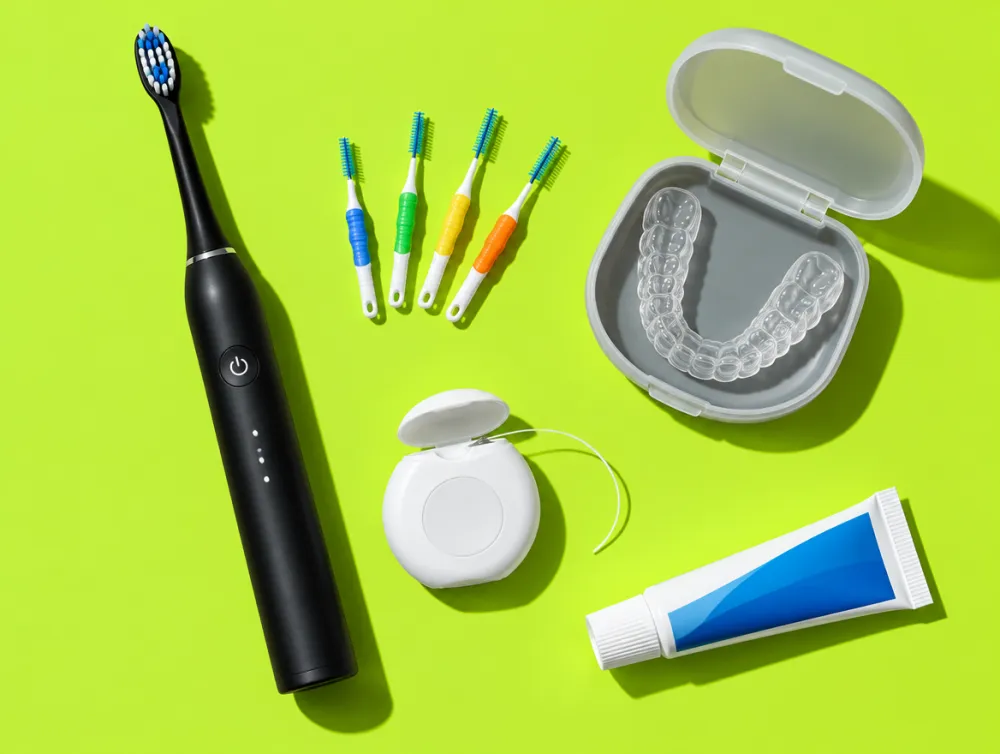
- Brush twice a day with a fluoride toothpaste, angling the brush at the gum line where the crown edge is.
- Clean between the teeth every day with floss or interdental brushes. This is the single most important habit for crowned teeth.
- Spit, don't rinse after brushing, so the fluoride stays on the teeth.
- Go easy on sugar and acidic drinks between meals. The crown won't decay, the tooth edge will.
- Don't use your teeth as tools. Opening bottles and biting nails is how crowns chip.
- Wear a night guard if you grind or clench, or if your dentist advises one. The NHS lists worn and broken teeth among the effects of grinding.
Check-ups
See a dentist for check-ups at the interval they recommend, and tell them which teeth are crowned. X-rays are the only way to see decay under the edge of many crowns, and the only way to spot a nerve problem that isn't causing symptoms. A long-term study of living teeth under metal-ceramic crowns found around 16% lost their nerve over about 14 years, often without obvious warning. Keep a copy of the X-rays and the record of which material is on which tooth; your UK dentist will want them.
Warning signs
See a dentist soon if you notice any of these around a crowned tooth:
- Pain on biting, or throbbing pain, especially at night.
- Swelling, a gum boil or a bad taste.
- A crown that moves or feels loose.
- Gums that bleed, stay red or swollen for more than a couple of weeks despite good cleaning.
- A dark line appearing at the gum, or food catching in a new gap. See food stuck between crowns.
In the UK, NHS 111 can direct you to urgent dental care if your own dentist is not available.
The guarantee
Precious Dental crowns carry a 5-year written guarantee. It depends on keeping up check-ups and hygiene, and on wearing a night guard if you were advised to. Read exactly what it covers on the guarantee page.
Common questions
How long do zirconia crowns last?
Reviews report about 97% five-year survival for solid zirconia crowns, and many last much longer. The tooth underneath, your gums and grinding decide most of it.
Do I need special toothpaste for crowns?
No special brand. Use a fluoride toothpaste, because it protects the natural tooth at the crown edge. Very abrasive whitening pastes can dull the glaze on some crowns, so a standard paste is a safe choice.
Can my UK dentist look after crowns done in Turkey?
Yes. Any dentist can check crowns, clean around them and X-ray the teeth. Bring your records: which teeth were crowned, the material and your X-rays.
What does it mean if my gum bleeds around a crown?
Usually that plaque is building up at the edge. Clean more carefully between the teeth for a couple of weeks. If it keeps bleeding, is swollen or sore, see a dentist.
What would make a crown need replacing?
Decay at the edge, a chip or crack, the crown coming loose, the gum shrinking back so the edge shows, or the nerve of the tooth dying. Some of these are covered by our guarantee within its terms; see the guarantee.
Sources
- Pjetursson BE et al. (2026). Survival, failure and complication rates of metal-ceramic, veneered and monolithic all-ceramic single crowns, Part 1. Int J Prosthodont
- Sailer I et al. (2015). All-ceramic or metal-ceramic tooth-supported fixed dental prostheses? Part I: Single crowns. Dent Mater
- Cheung GS et al. (2005). Fate of vital pulps beneath a metal-ceramic crown or a bridge retainer. Int Endod J
- NHS. Teeth grinding (bruxism)
- NHS. Gum disease
- Oral Health Foundation. Crowns
Checked October 2026. Where we give our own view as a clinic, we say so.
Send a selfie smile. Get a written crown plan.
A few photos of your teeth or a recent X-ray is enough to start. A dentist looks at them and you get a written plan: which teeth, which material, why, and the price in pounds. If you don't need crowns, we'll tell you.