Zirconium crowns in Turkey: the strong one
Zirconium crowns (dentists say zirconia) are the workhorse of modern crowns: metal-free, very strong and made by machine from a digital design. They are not automatically the right choice for every tooth.
 Medically reviewed by Dt. Hüseyin Yavuz Özbek, implant surgeon · Updated October 2026
A zirconia crown is a metal-free crown milled from zirconium dioxide, the strongest tooth-coloured dental ceramic. It suits back teeth, bridges, people who grind and full sets of crowns. Solid (monolithic) zirconia rarely chips; a 2026 review found about 97% five-year survival. On front teeth E-max can look more natural. At Precious Dental a zirconia crown is £150 per tooth.
- Price
- £150 per tooth
- 24-crown set
- £3,600
- Stay
- 5 hotel nights
- Guarantee
- 5 years
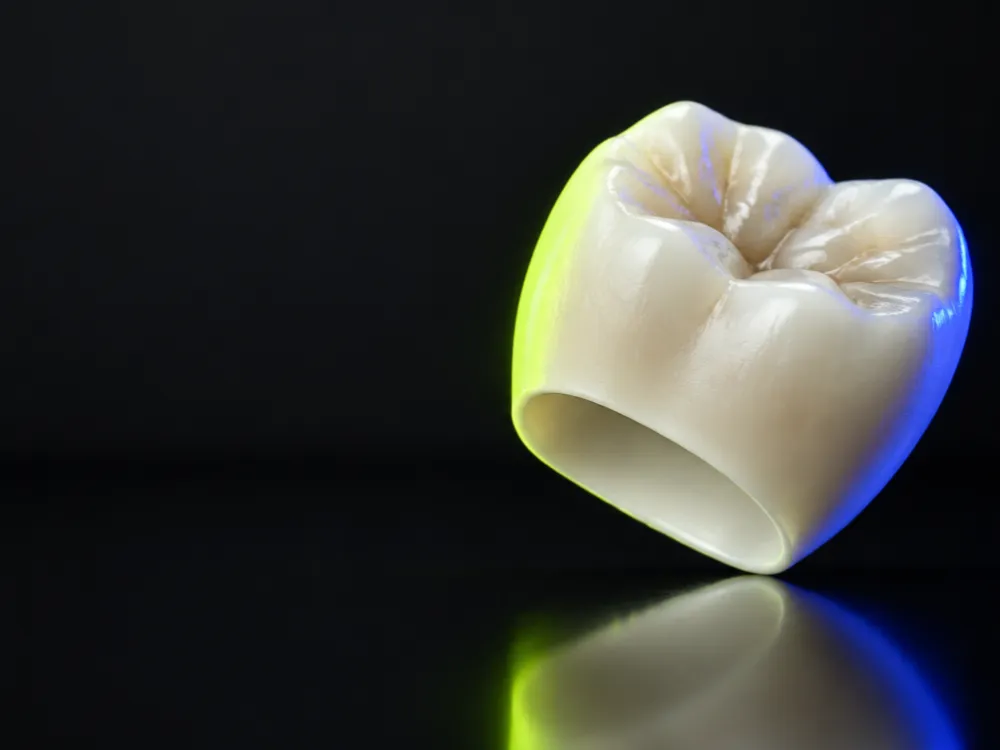
What zirconia actually is
Zirconia is zirconium dioxide, a ceramic that is also used in hip joints and industrial blades. In dentistry it is the strongest of the tooth-coloured ceramics. A review in the Journal of Dental Research describes it as the strongest dental ceramic and notes the trade-off that has driven its development: the older, very strong zirconias were quite opaque, so manufacturers have been making it more translucent while trying to keep enough strength.
That trade-off is why "zirconia" is not one material. Strong, more opaque grades suit back teeth and bridges. More translucent grades look better at the front but are not as tough. Many crowns today are made from multilayer blocks that shade from a darker neck to a lighter, more see-through edge, like a natural tooth. Our blog explains the different zirconia generations in more detail.
Solid or layered
A zirconia crown can be made in two ways. A monolithic crown is milled from one solid block, then stained and glazed. A layered crown has a zirconia core with porcelain built up on top by hand. Layered crowns can look beautiful, but the porcelain layer is the weak point: older research found zirconia crowns of that type were lost more often because the porcelain chipped. A 2026 systematic review found solid zirconia single crowns had five-year survival of about 97% and chipped much less than layered ones.
For back teeth and for people who grind, solid zirconia is usually the sensible choice. For a front tooth, layered zirconia or E-max may give a better match.
Who zirconia crowns suit
- Back teeth that are broken, cracked or heavily filled, where chewing forces are highest.
- Bridges replacing a missing tooth, where strength across several units matters.
- People who grind or clench. The NHS lists worn and damaged teeth as a result of bruxism; zirconia copes with that load better than glass-ceramics. A night guard is still wise.
- Full sets of crowns where many teeth need restoring at once.
- Replacing old metal-ceramic crowns that show a grey edge at the gum.
Zirconia is a poor reason to crown a healthy tooth. If your teeth are sound and you want a different colour or shape, read crowns vs veneers first.
How a zirconia crown is made at our clinic
First the tooth is examined and X-rayed, and any decay or infection is treated. The tooth is then shaped and scanned with a digital scanner, so there is no tray of impression paste. The crown is designed on screen and milled from zirconia, then sintered (fired) so it hardens and shrinks to its final size, and stained and glazed to your shade. At the try-in you check the fit, bite and shade before the crown is fixed permanently. The blog post how a zirconia crown is made walks through the lab side.
Zirconia crowns are done in one visit. Our zirconia packages include 5 hotel nights; the exact schedule is in your written plan. See the crown trip.
Risks and downsides
Zirconia itself is rarely the problem. The problems with crowns usually come from the tooth and gum around them:
- Tooth reduction. Every full crown needs the tooth shaped down on all sides, and that is permanent.
- Nerve problems. Preparing a living tooth for a crown can inflame or kill its nerve, sometimes years later, which then needs root canal treatment.
- Decay at the edge. The crown does not decay, but the tooth at its margin can. And zirconia is opaque on X-rays, which makes decay underneath harder to see. See decay under a crown.
- Debonding. Zirconia does not bond to cement as readily as glass-ceramics, so crown design and cementing technique matter. See how crowns are cemented.
- Looks. An over-bright, opaque front crown can look artificial.
Price
A zirconia crown at Precious Dental is £150 per tooth. A full set of 24 zirconia crowns is £3,600 with 5 hotel nights, airport transfers and a panoramic X-ray included; packages of 16, 20 and 28 are on crown prices. Flights are not included. If you need fillings, root canal treatment or gum treatment first, those are quoted separately in your plan.
Common questions
Is zirconium the same as zirconia?
In dentistry, yes. Zirconium is the metal element; zirconia (zirconium dioxide) is the ceramic the crown is made from. UK patients and clinics often say "zirconium crowns" for the same thing.
How long do zirconia crowns last?
Research reports five-year survival of about 97% for solid zirconia single crowns. Many last much longer. How long yours lasts depends on the tooth underneath, your gums, grinding and how well the edges are kept clean.
Do zirconia crowns look fake?
They can if the shade is too bright or the crown is too opaque for a front tooth. Modern multilayer zirconia blends better, and for the front teeth many people choose E-max. Check the shade at the try-in, in daylight.
Will a zirconia crown wear my other teeth?
Polished zirconia is generally kind to the opposing teeth; rough or poorly finished surfaces wear them more. That is one reason the bite and surface are checked and polished at fitting. See do crowns wear down opposing teeth?
How much is a full set of zirconia crowns?
At Precious Dental, 24 zirconia crowns are £3,600 including 5 hotel nights, transfers and a panoramic X-ray. Packages of 16, 20 and 28 are on crown prices.
Sources
- Pjetursson BE et al. (2026). Survival, failure and complication rates of metal-ceramic, veneered and monolithic all-ceramic single crowns, Part 1. Int J Prosthodont
- Zhang Y, Lawn BR (2018). Novel zirconia materials in dentistry. J Dent Res
- Sailer I et al. (2015). All-ceramic or metal-ceramic tooth-supported fixed dental prostheses? Part I: Single crowns. Dent Mater
- NHS. Teeth grinding (bruxism)
- Oral Health Foundation. Crowns
Checked October 2026. Where we give our own view as a clinic, we say so.
Send a selfie smile. Get a written crown plan.
A few photos of your teeth or a recent X-ray is enough to start. A dentist looks at them and you get a written plan: which teeth, which material, why, and the price in pounds. If you don't need crowns, we'll tell you.